2026-06-11
Steam cleansing uses water heated to 100 degrees Celsius or above to produce pressurized steam that dissolves grease, loosens dirt, lifts grime, and kills bacteria, dust mites, and mold spores on contact without requiring any chemical detergents. The steam cleaner steam penetrates porous surfaces such as grout, fabric, and wood grain where conventional cleaning cloths and spray chemicals cannot reach, making steam home cleaning more effective than standard wiping methods for deep-embedded dirt and biological contamination.
For most households, the best steam cleaner for home use falls into one of two categories depending on the primary cleaning task:
The decision between these two formats ultimately comes down to the scale and frequency of steam home cleaning sessions. Homes that do deep cleaning twice per week across multiple rooms benefit most from a full-size unit. Households that clean smaller areas daily or need a versatile spot-cleaning tool for surfaces and soft furnishings will find the Handheld Steam Cleaner more practical and better value.
Understanding how steam cleaner steam actually cleans surfaces explains why steam cleansing outperforms conventional wiping and scrubbing for many household tasks, and why it is effective against biological contaminants that chemical sprays often only partially address.
When water is heated above 100 degrees Celsius in a sealed boiler under pressure, it converts to steam that holds substantially more thermal energy than liquid water at the same temperature. When this pressurized steam contacts a cooler dirty surface, it rapidly transfers its thermal energy to the surface, softening and dissolving grease, loosening mineral deposits, and penetrating porous materials. The sudden condensation of steam on the surface also creates a brief pressure differential that physically lifts loosened particles away from the surface, assisting the mechanical wiping that follows the steam application.
The temperature at the nozzle of a quality steam cleaner reaches 100 to 175 degrees Celsius depending on the operating pressure, which is significantly above the temperatures needed to kill the most common household pathogens: dust mites die at 55 degrees Celsius sustained for 30 minutes or at 60 degrees Celsius for 10 minutes; most common bacteria including E. coli and Salmonella are killed within seconds at 70 to 75 degrees Celsius; and mold spores require 120 degrees Celsius for reliable destruction. The steam output of a quality home steam cleaner exceeds all these thresholds, making steam cleansing genuinely effective for hygiene as well as visual cleanliness.
Steam cleaner steam is highly effective at removing:
Steam cleaner steam is less effective or potentially damaging on:
Identifying the best steam cleaner for home use requires matching the machine's features to the specific cleaning tasks you need to perform most frequently. The steam home cleaning market offers several distinct product types, and each has a different combination of strengths and limitations.
Steam mops are upright units with a microfiber pad that glides across hard floor surfaces while steam is emitted through the pad from below. They are the most popular steam home cleaning tool for households with significant areas of tile, stone, laminate (with care), or sealed hardwood flooring. Quality steam mops heat up in 15 to 30 seconds and deliver continuous steam through the floor pad for 20 to 45 minutes per 600 to 800 ml tank fill. The most important specification for a steam mop is the steam temperature at the pad surface: models delivering 110 to 130 degrees Celsius at the floor contact zone provide significantly better grease dissolution and disinfection than cheaper models delivering 85 to 95 degrees Celsius.
Cylinder steam cleaners consist of a rolling boiler unit connected by a hose to a handheld wand with interchangeable attachments. They are the best steam cleaner for home use when cleaning variety is the primary requirement: the same machine can clean grout with a detail brush, sanitize kitchen surfaces with a rectangular pad, steam clean upholstery with a fabric nozzle, refresh curtains with a garment tool, and clean car interiors with a crevice nozzle, all using different attachments from the standard kit. Tank capacities of 1.0 to 1.8 liters provide 30 to 60 minutes of continuous steam output, and many models offer a pressurized fill cap that allows refilling while warm without waiting for full cooldown.
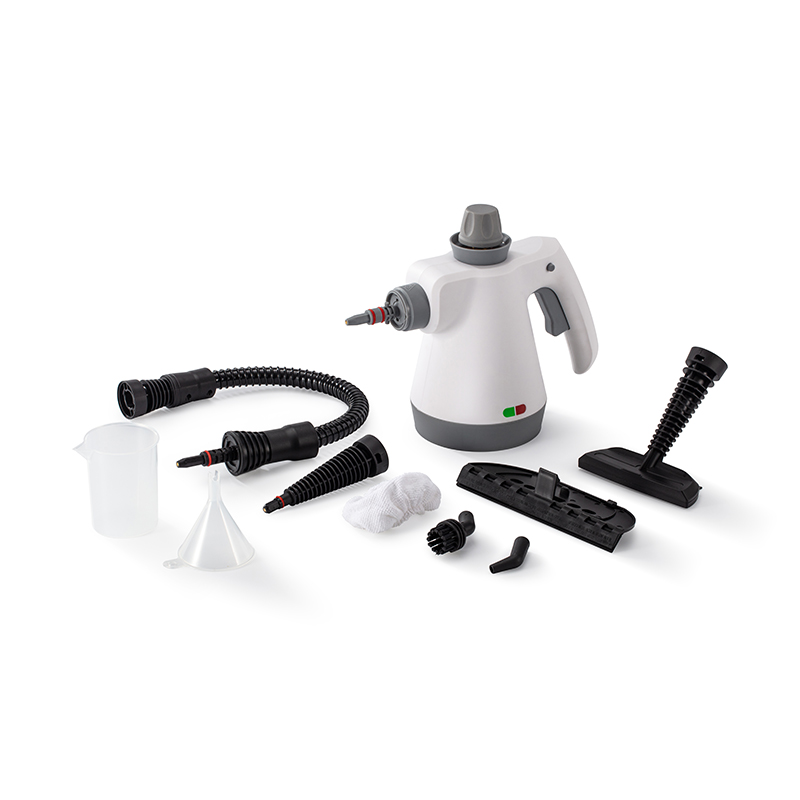
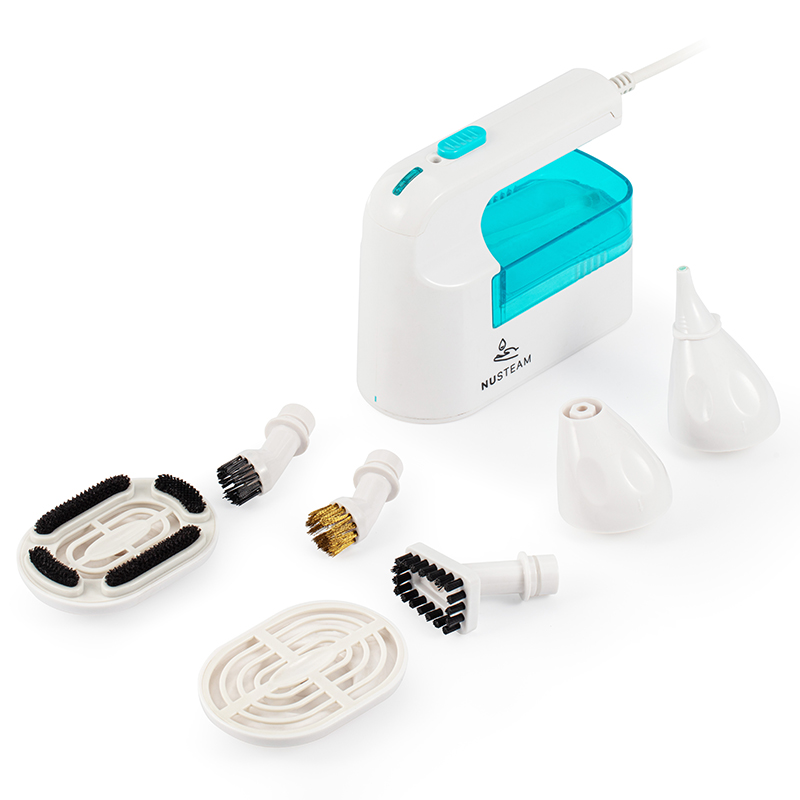
The Handheld Steam Cleaner is a compact, self-contained unit with the boiler, water tank, and nozzle all in a single grip-able housing weighing 0.8 to 1.5 kg. It plugs directly into a standard power outlet and is ready to use in 20 to 45 seconds from cold. The Handheld Steam Cleaner is ideal for:
The limitation of the Handheld Steam Cleaner is its small water tank (100 to 350 ml) that provides only 10 to 20 minutes of continuous steam output before refilling is needed, and the need to wait 2 to 5 minutes for the unit to depressurize before adding more water. For whole-home steam home cleaning sessions, the Handheld Steam Cleaner is best used in combination with a steam mop or cylinder unit rather than as the sole machine.
| Feature | Steam Mop | Cylinder Cleaner | Handheld Steam Cleaner |
|---|---|---|---|
| Tank capacity | 600 to 800 ml | 1,000 to 1,800 ml | 100 to 350 ml |
| Heat-up time | 15 to 30 seconds | 3 to 8 minutes | 20 to 45 seconds |
| Continuous steam time | 20 to 45 min | 30 to 60 min | 10 to 20 min |
| Weight | 1.5 to 2.5 kg | 3.5 to 6.0 kg | 0.8 to 1.5 kg |
| Surfaces covered | Hard floors only | All surfaces | Targeted areas |
| Typical price range | USD 40 to USD 150 | USD 100 to USD 400 | USD 30 to USD 120 |
Knowing how to use a steamer correctly is as important as choosing the right machine. Incorrect technique reduces cleaning effectiveness, risks surface damage, and can create burn hazards from misdirected steam. The following guidance covers the most common steam home cleaning applications.
Tile and grout cleaning is one of the most dramatically effective applications of steam cleansing because steam penetrates the porous grout matrix and dissolves embedded grease and dirt that conventional scrubbing cannot reach without aggressive chemicals. The correct technique:
The kitchen is the highest-value room for cleaning with a steamer because grease, cooking splatter, and food residue respond exceptionally well to thermal treatment. Steam cleaning a kitchen cooktop after each week's cooking removes accumulated grease in approximately 5 to 8 minutes of steaming and wiping, compared to 20 to 30 minutes of chemical soaking and scrubbing with conventional degreasers.
Cleaning with a steamer on upholstered furniture, mattresses, and carpet requires a different technique than hard surface steam cleansing because the goal is sanitizing and refreshing rather than the deep soil dissolution that steam achieves on non-porous surfaces. Key principles:
The Handheld Steam Cleaner is particularly effective in the bathroom because its compact size and targeted nozzle can reach the crevices around faucet bases, behind toilet hinges, and inside shower door tracks where conventional cleaning tools cannot reach. For bathroom steam cleansing, work systematically from the highest surfaces (shower nozzle, mirror frame) downward to the floor, so that displaced soil falls onto surfaces that have not yet been cleaned rather than recontaminating already-cleaned areas.
The comparison between steam home cleaning and conventional chemical cleaning methods is relevant to household purchasing decisions, environmental impact, and the health of occupants in the cleaned spaces. Understanding the genuine advantages and limitations of each approach leads to more informed choices about when steam cleansing is the right tool and when chemical treatments remain necessary.
Steam home cleaning is not a complete replacement for all chemical cleaning products. Some situations genuinely require chemical treatments that steam cannot replicate:
The Handheld Steam Cleaner category has grown significantly in the consumer market as households recognize the combination of convenience, fast heat-up, and targeted cleaning capability that handheld units offer for quick cleaning tasks that do not justify the setup and pack-away time of a full cylinder unit. Choosing the right Handheld Steam Cleaner requires evaluating several specifications that determine real-world performance rather than marketing claims.
Steam temperature at the nozzle is the primary determinant of cleaning and sanitizing effectiveness for any Handheld Steam Cleaner. Handheld units generating steam at 100 to 120 degrees Celsius at the nozzle provide useful cleaning action on light to medium soiling; units generating 130 to 150 degrees Celsius deliver genuinely effective disinfection and can tackle heavy grease deposits. Low-cost Handheld Steam Cleaner models below USD 35 often deliver steam at 90 to 100 degrees Celsius at the nozzle, which is at or below the boiling point and therefore lacks the penetrating energy of true pressurized dry steam. Check the specification sheet for operating pressure (look for 3 to 4 bar for a quality handheld unit) as well as temperature to confirm the unit delivers pressurized rather than ambient-pressure steam.
A Handheld Steam Cleaner is only as versatile as the attachments it includes. The most practically useful attachments for home use are:
The water tank of a Handheld Steam Cleaner determines how long a continuous cleaning session can last and how convenient refilling is when the tank empties. Tanks of 200 to 350 ml provide 15 to 20 minutes of continuous steam, which is adequate for most targeted cleaning tasks. Smaller tanks of 100 to 150 ml provide only 8 to 12 minutes but are more compact and lighter, which reduces hand fatigue during overhead or extended-reach cleaning sessions. Most Handheld Steam Cleaner models require a 2 to 5 minute depressurization and cooling wait before the tank cap can be safely opened for refilling. Models with a separate water reservoir that feeds the boiler without requiring full depressurization, or with a quick-fill valve, significantly improve the usability experience for tasks that require multiple tank fills.
Developing a systematic steam home cleaning plan maximizes the effectiveness of each cleaning session and ensures that the most hygiene-critical areas of the home receive steam treatment at appropriate intervals. The following plan covers the rooms and surfaces that most benefit from regular cleaning with a steamer.
The kitchen benefits most from weekly cleaning with a steamer because it accumulates the most significant grease, cooking residue, and food contamination of any room. A weekly kitchen steam cleansing session of 15 to 20 minutes using a cylinder unit or Handheld Steam Cleaner with the appropriate attachments covers: the cooktop and hob surface, the splashback tiles and grout behind the hob, the microwave interior, the refrigerator door seal, the kitchen sink and faucet base, the countertops, and any high-touch surfaces including light switches and door handles.
The bathroom's combination of high humidity and frequent biological contact makes it the highest-priority steam cleansing room in any household. Twice-weekly steam treatment of the shower tiles, shower door tracks, toilet exterior surfaces, sink, and faucets prevents the mold, soap scum, and limescale accumulation that requires heavy chemical treatments when allowed to build up over weeks. A twice-weekly 10 to 15 minute bathroom steam session with the Handheld Steam Cleaner maintains hygiene at a level that prevents the heavy-cleaning problem rather than managing it after the fact.
Monthly steam treatment of mattresses, upholstered furniture, and soft furnishings addresses the dust mite populations that accumulate in fabric surfaces regardless of visible cleanliness. Research published in clinical allergy literature consistently finds that dust mite populations in mattresses and upholstery are the most significant trigger for domestic allergic asthma and rhinitis, affecting an estimated 1 in 5 people in developed countries. Monthly steaming of mattress surfaces, sofa cushions, and fabric headboards kills active dust mite populations and denatures the mite allergen proteins that are the actual trigger for allergic responses, providing meaningful allergy symptom reduction that chemical sprays designed for the same purpose do not match in clinical effectiveness.
Steam cleansing is the process of using pressurized hot steam (100 to 175 degrees Celsius at the nozzle) to dissolve grease, loosen dirt, and kill bacteria, mold, and dust mites on household surfaces without chemical cleaners. It is genuinely effective for these tasks because high-temperature steam destroys biological contaminants through thermal denaturation at temperatures well above what bacteria and mites can survive, and dissolves grease through the thermal reduction of surface tension and viscosity. Independent testing confirms that quality steam cleaner steam at 120 degrees Celsius or above kills 99.9% of common household bacteria within 3 seconds of contact, matching the efficacy of most household chemical disinfectants without leaving chemical residues.
The best steam cleaner for home use depends on your primary cleaning tasks. For hard floors and tiles across large areas, an upright steam mop with variable steam settings and washable microfiber pads delivers the best combination of convenience and effectiveness. For multi-surface steam home cleaning including floors, kitchen appliances, bathroom fixtures, and upholstery, a canister cylinder steam cleaner with a comprehensive attachment kit is the most versatile choice. For targeted spot cleaning and quick daily maintenance, the Handheld Steam Cleaner at 3 to 4 bar operating pressure with a good attachment kit is the most practical and space-efficient option. For complete home coverage, the best system is a canister steam cleaner for weekly deep cleaning combined with a Handheld Steam Cleaner for daily targeted maintenance.
To use a steamer on bathroom tile grout, attach the narrow jet nozzle or grout brush attachment to your Handheld Steam Cleaner or cylinder unit. Hold the nozzle 1 to 2 cm from the grout line and apply short bursts of steam along 15 to 20 cm sections, moving slowly at approximately 2 cm per second. Immediately follow the steam application with a stiff brush scrub while the grout is still hot, then wipe the loosened soil away with a clean damp cloth. For darkly stained or heavily molded grout, apply steam, scrub, and then apply a second steam pass before the final wipe. Regular monthly steam treatment of bathroom grout prevents the severe staining and mold growth that requires chemical bleach treatments when allowed to accumulate over longer intervals.
Cleaning with a steamer is safe on ceramic tile, porcelain tile, natural stone (granite, marble, travertine) with intact sealant, and sealed hardwood floors where the surface sealant is in good condition. It is not recommended on unsealed hardwood floors (where steam moisture penetrates the grain and causes swelling and warping), laminate floors with moisture-sensitive click seams, vinyl flooring with adhesive-bonded edges, and any floor with visible gaps or damaged sealant that would allow moisture penetration to the subfloor. When in doubt, test a small inconspicuous area first and inspect the surface after the steam has dissipated before proceeding across the full floor area.
Most Handheld Steam Cleaner models heat up in 20 to 45 seconds from cold, which is one of their primary advantages over cylinder steam cleaners that take 3 to 8 minutes to reach operating temperature. This fast heat-up time makes the Handheld Steam Cleaner practical for quick cleaning tasks where waiting several minutes for a large machine to heat up would make using it feel more inconvenient than manual cleaning. The rapid heat-up is possible because handheld units have smaller boilers with lower water volumes that reach operating temperature quickly, at the cost of shorter continuous steam runtime compared to the larger boilers of cylinder units.
Steam home cleaning can replace the majority of household chemical cleaners including floor cleaners, kitchen degreasers, bathroom disinfectants, and surface sprays. It cannot fully replace chemical descalers for heavy limescale deposits, toilet bowl cleaners designed to clean below the waterline, enzymatic stain removers for specific protein and tannin stains, and mold treatments on porous materials like unsealed grout where mold has penetrated the material surface rather than just colonizing it. A household using steam home cleaning for all appropriate tasks can realistically eliminate 60% to 75% of its chemical cleaning product purchases while achieving equal or better hygiene results on the steam-appropriate surfaces.
Monthly steam treatment of mattress surfaces is the recommended frequency for controlling dust mite populations in typical households. Households with allergy sufferers, particularly those with diagnosed dust mite sensitization and allergic asthma or rhinitis, benefit from bi-weekly mattress steaming. The steam treatment should cover the entire top surface of the mattress and both side panels, using the fabric nozzle at 3 to 5 cm distance from the surface in slow overlapping passes. Allow the mattress to air dry for 1 to 3 hours in a ventilated room with windows open before remaking the bed. Remove and steam the mattress protector and pillow covers separately on the same schedule.
Distilled or demineralized water is the best choice for any steam cleaner, including both cylinder units and the Handheld Steam Cleaner. Tap water contains dissolved minerals (calcium carbonate, magnesium, and others) that deposit as scale inside the boiler over time, reducing heating efficiency, increasing energy consumption, and eventually blocking the steam output nozzle or internal valves. Using distilled water eliminates mineral scale formation and significantly extends the machine's service life. If distilled water is not consistently available, a 50/50 mix of tap water and distilled water substantially reduces scale formation compared to undiluted tap water. Avoid using mineral water (bottled spring water), which has higher mineral content than most tap water and will scale the boiler faster than ordinary tap water.
Descaling frequency depends on water hardness in your area and whether you use distilled or tap water. Most manufacturers recommend descaling every 1 to 3 months of regular use with tap water. The standard descaling procedure is: fill the water tank with a 50/50 mix of white vinegar and distilled water (or a commercial steam cleaner descaling solution), run the machine for 2 to 3 minutes to distribute the solution through the boiler and internal pipework, allow the solution to soak inside the machine for 30 to 60 minutes with the machine switched off, then run the machine again to flush the loosened scale out through the steam nozzle, and finally flush twice with plain distilled water to remove all vinegar or descaler residue before returning to normal use. Check the manufacturer's instructions for your specific model, as some manufacturers recommend only their proprietary descaling products to protect warranty coverage.
A Handheld Steam Cleaner is safe to use in homes with children and pets, and its residue-free cleaning method is healthier than chemical cleaners for households with young children who touch and mouth cleaned surfaces. The safety precaution during use is to keep children and pets away from the active cleaning area because the steam nozzle output at 100 to 150 degrees Celsius causes immediate burns on contact with skin or mucous membranes. After cleaning and wiping, surfaces are immediately safe for contact once cooled, with no residue or chemical drying time required. This makes steam home cleaning with a Handheld Steam Cleaner particularly appropriate for cleaning children's toys, high chairs, changing mats, and other items that children put in their mouths or touch frequently throughout the day.
Prodotti correlati
Indirizzo
Zona est Zona di sviluppo Città di Lingshan Città di Yuyao Zhejiang R.P.C.
tel
+86-18905840666 / +86-574-62067822
+86-574-62062588
CODICE QR